Katsura Imperial Villa and the Art of the Sukiya Style
A seventeenth-century princely retreat in Kyoto that taught twentieth-century modernists a lesson about restraint.
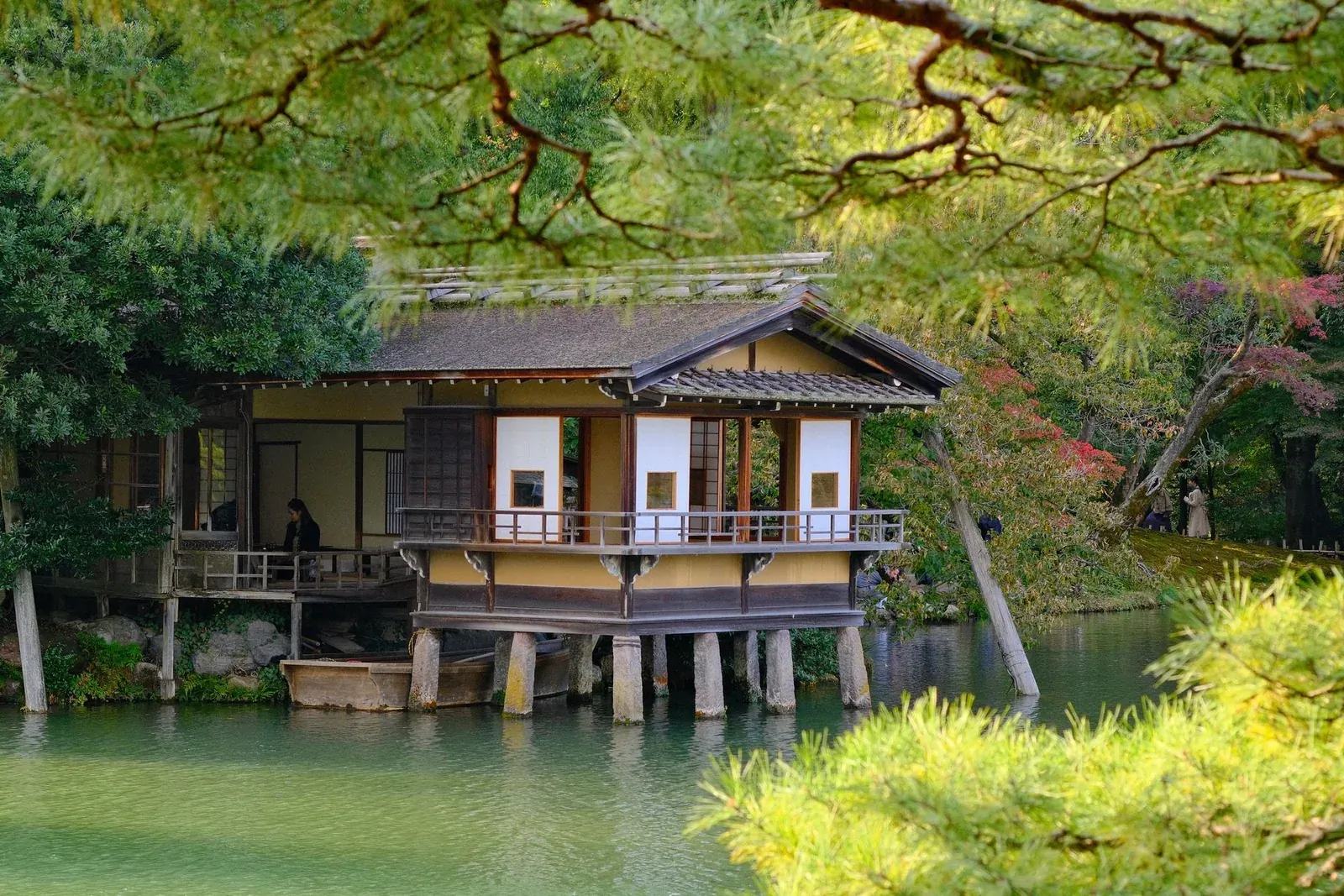
Kyoto pond garden with a pavilion reflected in still water. Photo: Pexels
When the German architect Bruno Taut visited Katsura Imperial Villa in 1933, he wrote that it moved him to tears. He saw in its staggered pavilions, unpainted wood and paper screens something European modernists were still struggling to articulate: that beauty could come from proportion, honesty of materials and the relationship between inside and outside.
At a glance
- Location
- Katsura, Kyoto
- Built
- 17th century
- Style
- Sukiya-zukuri
- Visits
- By advance reservation via the Imperial Household Agency
Katsura was built in stages during the seventeenth century by the princes of the Hachijō-no-miya family on the western edge of Kyoto. Its main buildings — the Old Shoin, Middle Shoin and New Palace — step diagonally across the landscape in a formation often called the "flying geese" arrangement, so that each room opens to its own view of the garden and pond.
What sukiya means
Sukiya-zukuri grew out of the aesthetics of the tea ceremony. Where formal shoin architecture expressed hierarchy through decoration, sukiya preferred rustic refinement: slender posts that sometimes keep their bark, earthen walls, carefully chosen irregularities. It is an architecture that pretends to be humble while being exquisitely calculated.
Every view at Katsura is composed, but none of them look composed.
The modular discipline of the tatami mat governs the plans, giving the rooms a calm rhythm that extends outward through sliding shoji onto the verandas. One small platform, the moon-viewing deck off the Old Shoin, projects toward the pond for the single purpose of watching the moon rise.
Visiting today
Katsura is managed by the Imperial Household Agency and can only be seen on guided tours that must be booked in advance. Arrive early, stay quiet and look down as often as up: the stepping stones and gravel edges are as carefully considered as the buildings.