Ise Jingu: The Shrine That Is Rebuilt Every Twenty Years
For more than a thousand years, Japan's most sacred shrine has been dismantled and rebuilt in fresh cypress. What does it mean for a building to be both ancient and new?
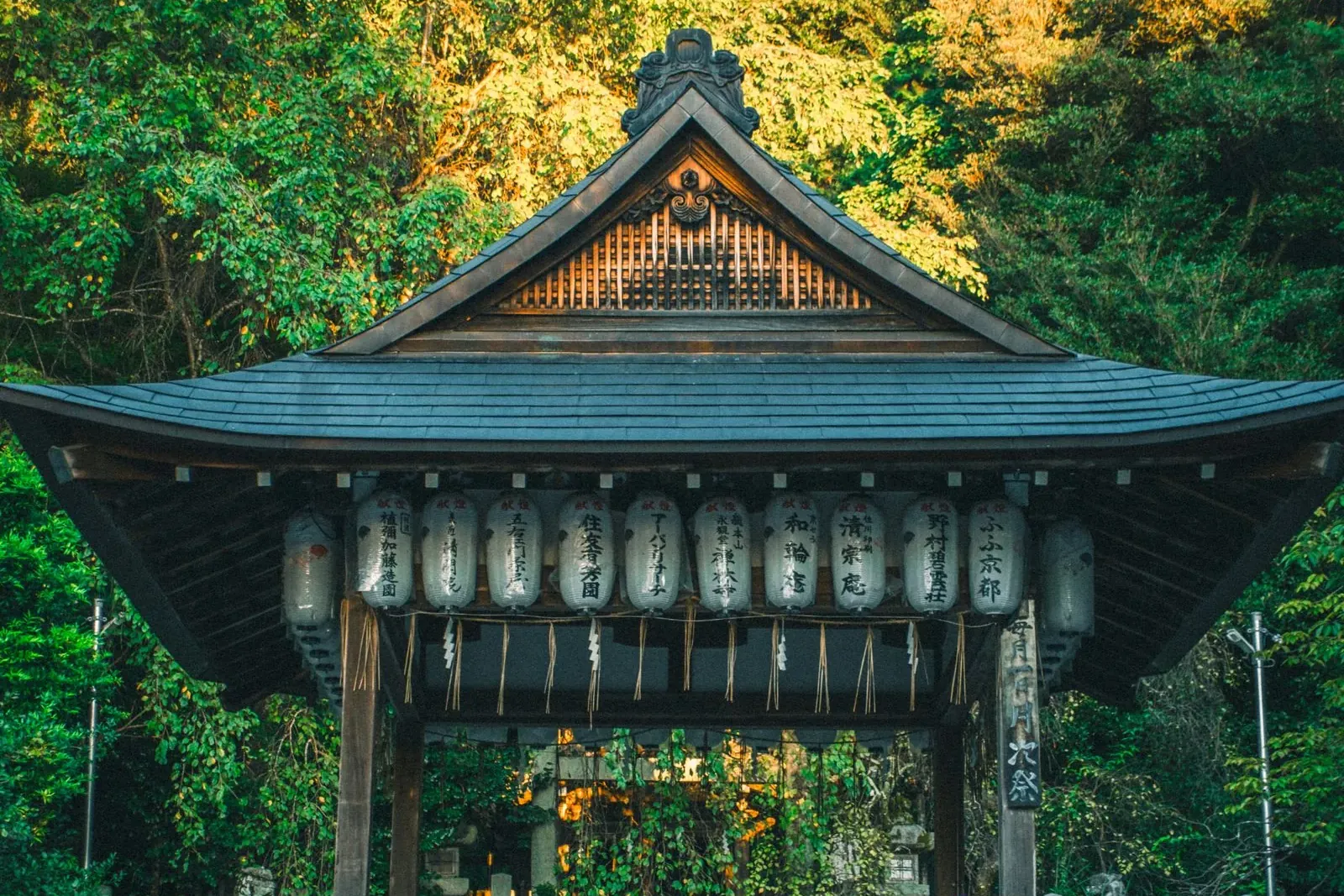
Wooden Shinto shrine among trees with hanging lanterns. Photo: Pexels
On a forested site in Mie Prefecture stands a building that is, depending on how you count, either thirteen years old or well over a millennium. The Inner Shrine of Ise Jingu, dedicated to the sun goddess Amaterasu, is ritually rebuilt every twenty years on an adjacent plot, an identical copy raised beside the old one before the deity is moved across.
At a glance
- Location
- Ise, Mie Prefecture
- Style
- Shinmei-zukuri
- Ritual
- Shikinen Sengū, every 20 years
- Last rebuilding
- 2013 (62nd)
The ceremony is called Shikinen Sengū, and its origins are traditionally traced to the late seventh century. The 62nd rebuilding was completed in 2013; preparations for the next, scheduled for 2033, began years in advance, starting with the ceremonial felling of Japanese cypress — hinoki — in mountain forests.
A grammar older than Buddhism
Ise is the purest example of the shinmei-zukuri style: a raised floor on posts set directly into the ground, a thatched gable roof, and the crossed finials called chigi that extend from the roof ends like scissors. Small log-shaped katsuogi lie across the ridge. There is no curving temple roof, no imported Chinese bracketing, nothing painted. It is architecture before ornament.
The building is not preserved. The knowledge of how to build it is.
That is the quiet radicalism of Ise. In Europe, authenticity tends to live in original material: the stones of a cathedral, the beams of a barn. At Ise, authenticity lives in craft and in form. Every two decades a new generation of carpenters learns the joinery, the thatching, the metalwork, under the hands of the previous one. The building becomes a vessel for transmitting skill.
What happens to the old timber
Nothing is wasted. Timbers from the dismantled sanctuaries are distributed to other shrines across Japan, where they are reused in torii gates and smaller buildings. The great pillars of one generation become the gateways of another.
Visitors cannot enter the innermost precinct, and photography of the main sanctuary is restricted. Yet even from behind the wooden fences, the clarity of the forms — pale wood against dark cedars, raked white gravel underfoot — is unforgettable. It is a reminder that in Japan, permanence is often achieved through renewal rather than resistance.